Growing Perennial Alliums
growing Tree Onions, Shallots and Brown Potato Onions
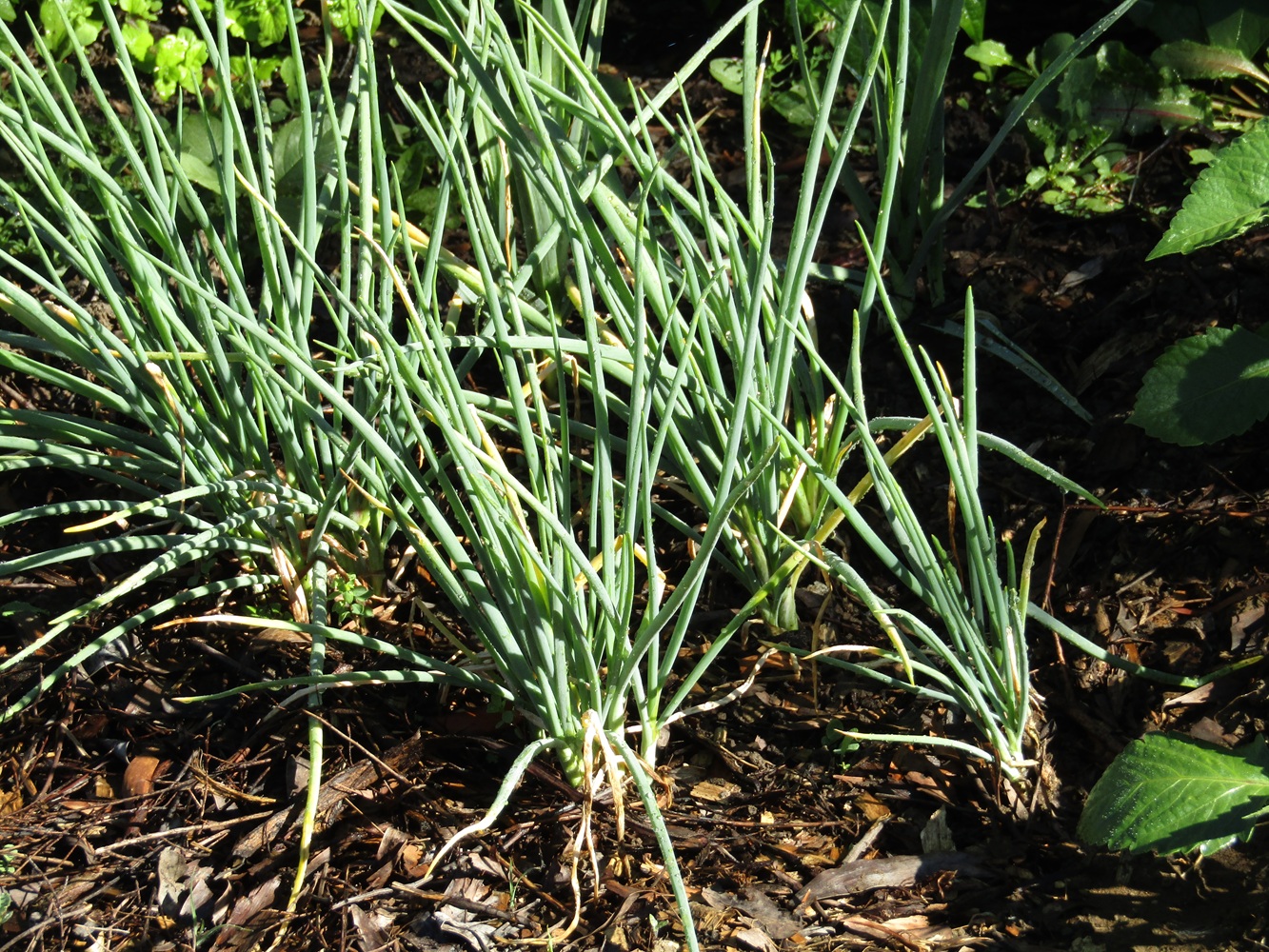
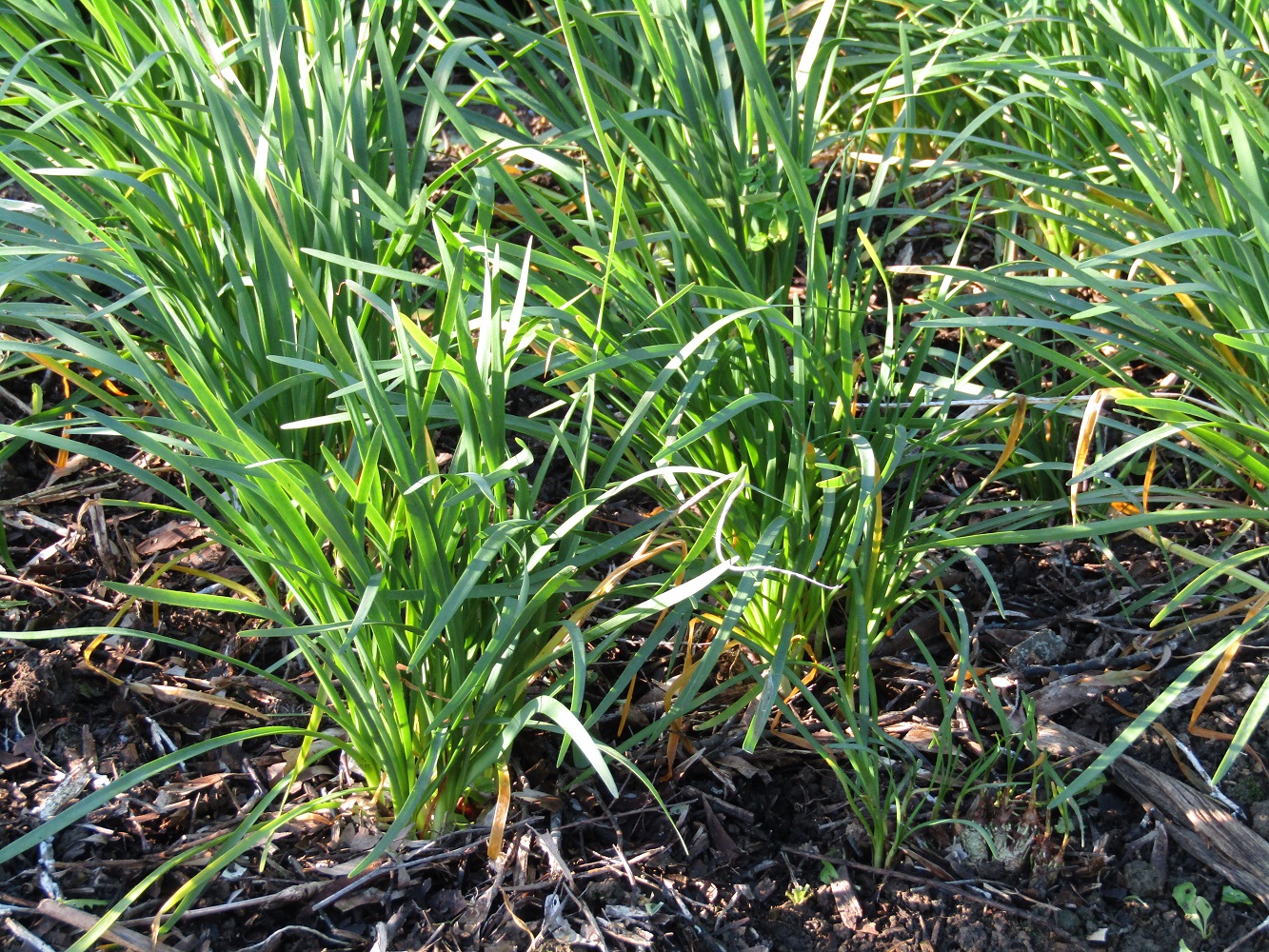
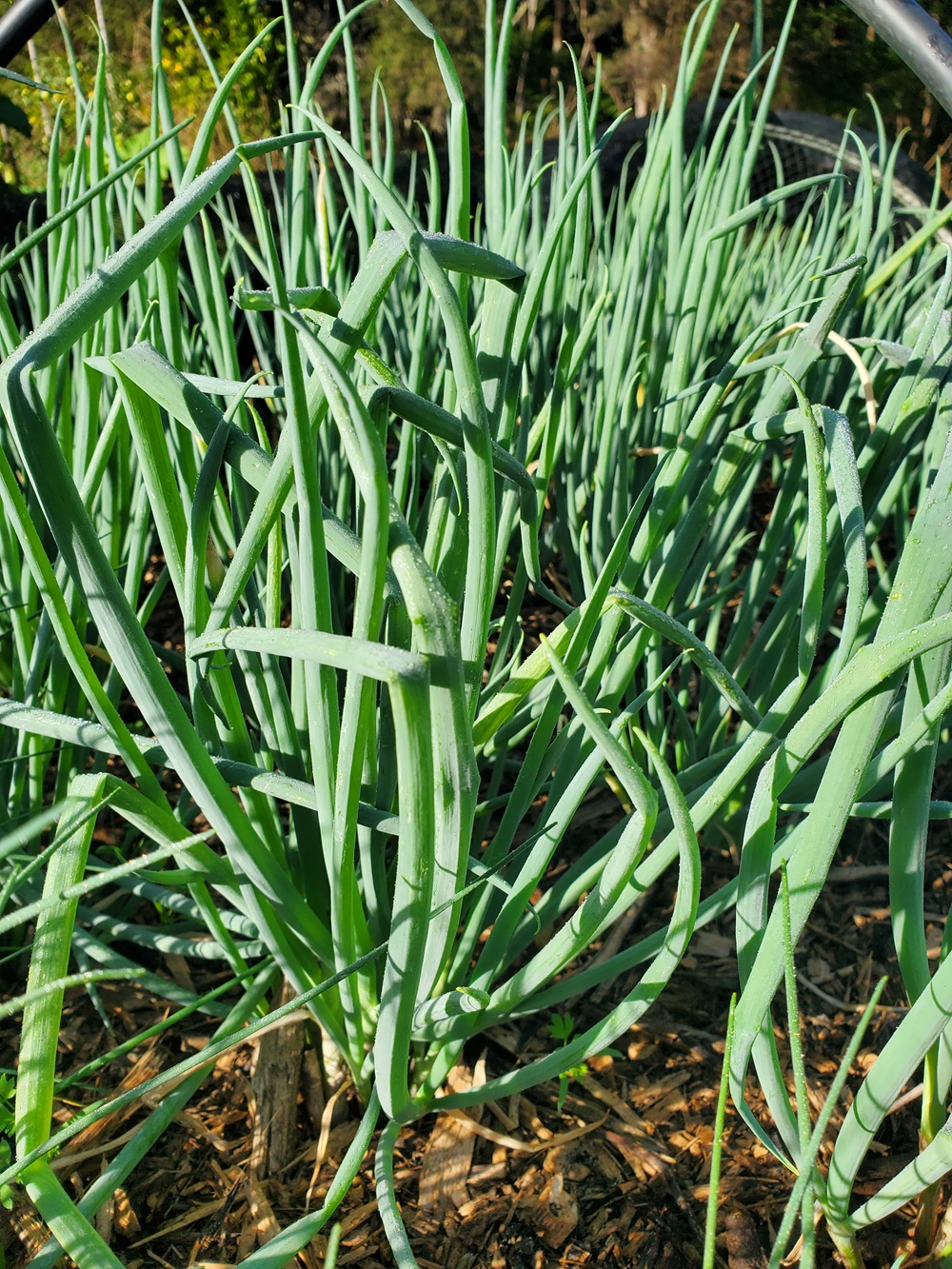
These alliums are all perennial in that if they are left in situ the clumps will keep on growing. We effectively grow them as annuals though, planting bulbs or bulbils each year which then grow on to form a clump of onions. They do best in light, fertile, aerated soils with good drainage and in a sunny position. We enrich soil with lime, well rotted manure and a fungal rich compost.
Our Tree Onions and Shallots are quite similar and both are fantastic producers. They came from different sources though so we keep growing them as separate lines. You could decide to just grow the type which do best for you but I’ve observed that they do function differently in any given year. One type might do better one year and the other the next. So they clearly do have differences and we believe strongly in maintaining genetic diversity to increase resilience going forwards. We don’t know which will best adapt to changing conditions so we keep growing both lines separately.
Planting
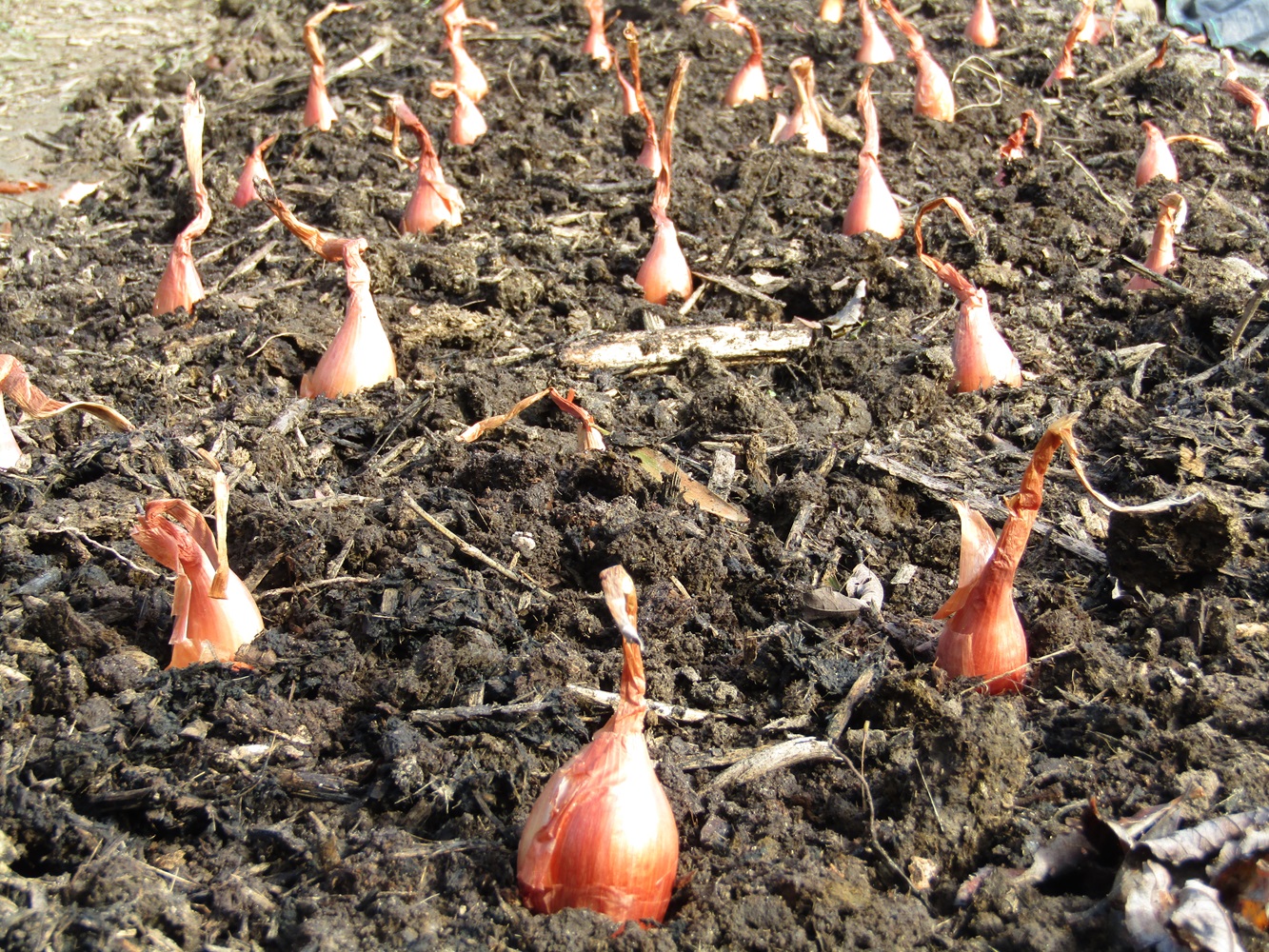
They can be planted any time from May through to August with the best planting time varying from region to region. Most commonly May or June would be the best months to plant. For us in Hokianga August has proved to be too late and we aim for May and are hopefully going to experiment this year planting some in April. If you are growing and harvesting your own for replanting then you can plant either bulbs or any bulbils that form on top. We would only plant larger bulbils. When selecting for bulbs to replant we choose those where the bulbil stalk comes up up between bulbs, not from within a bulb. This is because the ones where the stalk is inside the bulb are harder to prep when cooking and some of what would be bulb is taken up by stalk. So when selecting seed bulbs we are selecting those which don’t have this characteristic.
We plant all of these onions on a diagonal spacing with Tree Onions and Shallots spaced at approximately 20 cms and Brown Potato Onions closer at around 12.5 to 15 cms. We position the bulbs on the surface of the soil to get the correct pattern and spacing, and then go back along the bed planting each bulb just below the surface of the soil.
We have problems with pukeko and pheasants pulling up the newly planted bulbs so use hoops and nets on the beds to protect them until established.
These onions do not like weed competition so need to be kept weed free and a thick layer of mulch can be beneficial. We used to mulch with hay but found this had disadvantages including bringing weed seeds into the garden, so now we mulch with partially composted ramial wood chip. Alliums seem to do particularly well in fungal rich soils.
Harvesting
Harvest time is usually December or January when the clumps of bulbs are well formed and the leaves are starting to dry at the ends. Cure them under cover and out of full sun in a place with plenty of air movement. To store they can either be strung up in bunches or put in onion sacks. They store very well and with care last most, if not all, of the year.
These alliums are only for sale around April to June, details here


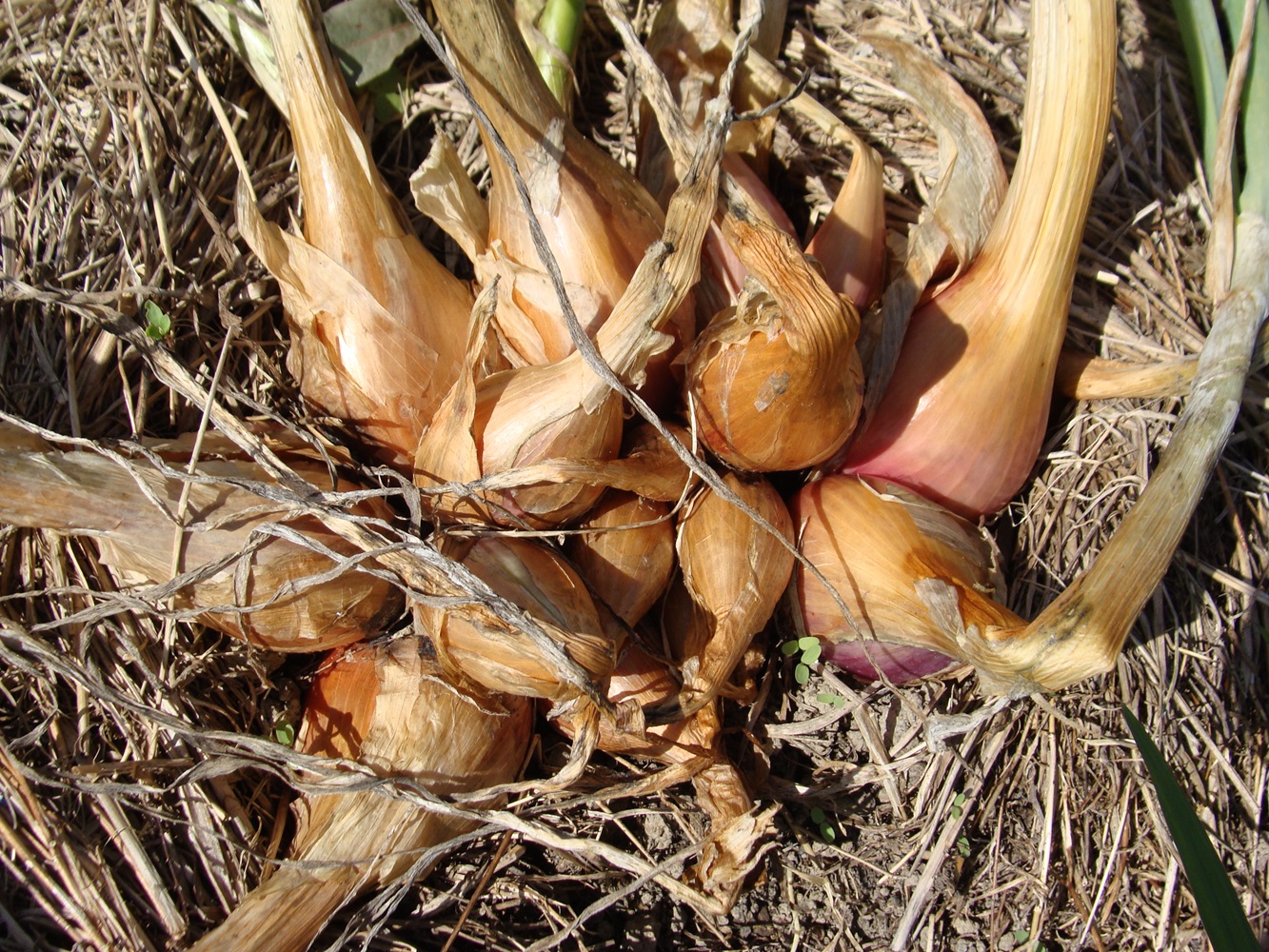


Growing Clumping Onions
We have 3 perennial clumping onions available. Pictured on the right in order these are:
They are all a great addition to a garden and, being perennial and clump forming, can be divided as they grow to form new plants. These alliums are all perennial in that if they are left in situ the clumps will keep on growing. We effectively grow them as annuals though, planting bulbs or bulbils each year which then grow on to form a clump of onions. They do best in light, fertile, aerated soils with good drainage and in a sunny position. We enrich soil with lime, well rotted manure and a fungal rich compost.
Growing Instructions
These alliums are all perennial and form a clump which grows and can be divided to give you more plants. They do best in fertile soil that has been enriched with well rotted manure or compost and is not waterlogged. They benefit from a fungal rich mulch and we use partially composted ramial wood chip if available. In the height of summer we use hoops and shade cloth to protect them from the intense sun. Society garlic is the most hardy and drought tolerant of the 3 and doesn’t require shading.
They don’t like weed competition. We divide the clumps and replant every year to regenerate them and remove any weeds.