Growing Healthy fruit trees
There are 4 main elements that we consider when thinking about how to grow healthy fruit trees.
- Tree selection
- Tree location
- Tree planting
- Creating a supportive ecology for your trees.
So essentially this is what we plant, where we plant it, how we plant it and how we create the conditions for it to thrive (a supportive ecology). In this article we’ll cover the what, the where and the how. Creating a supportive ecology is covered in a separate article.
Tree Selection
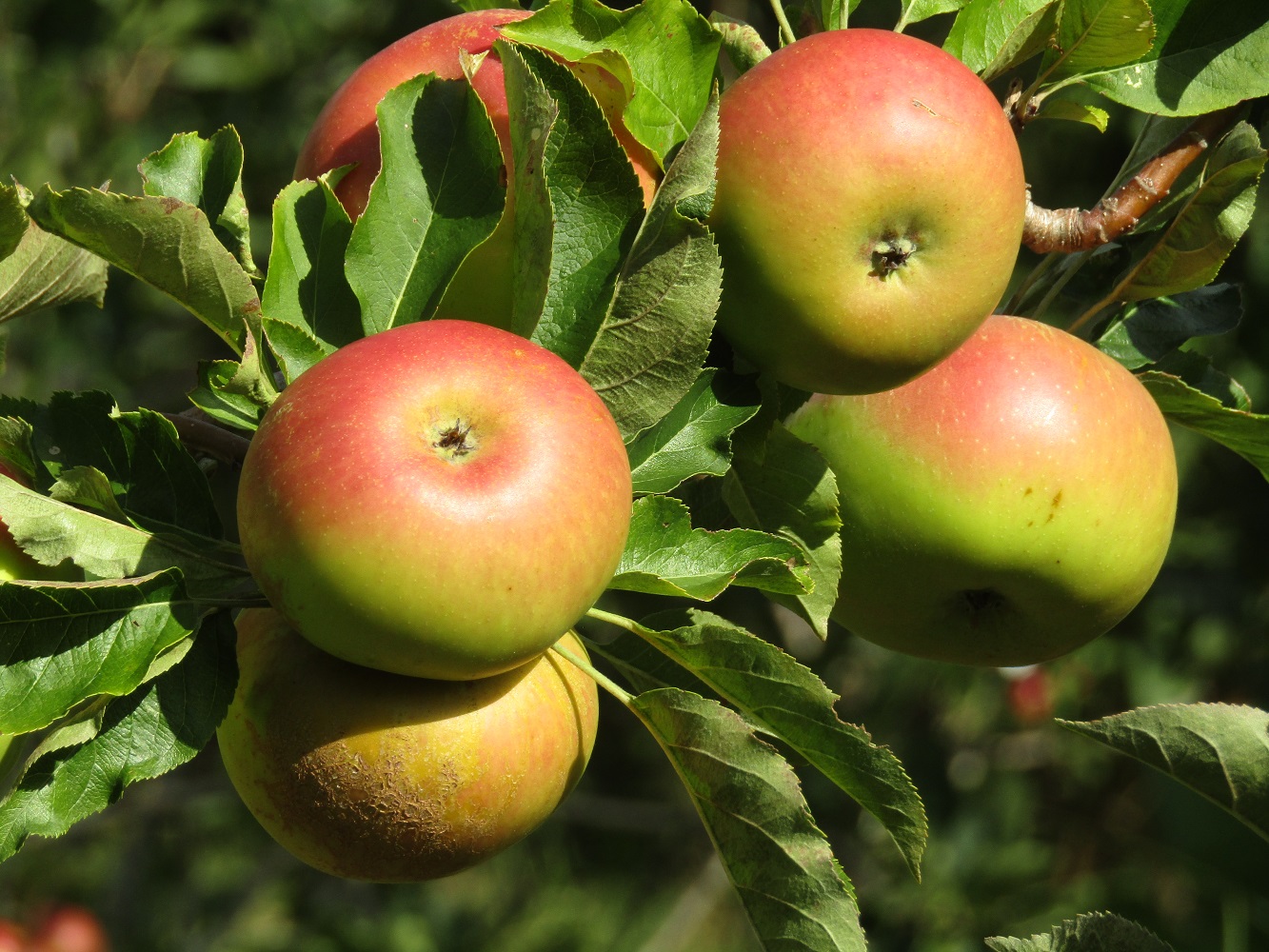
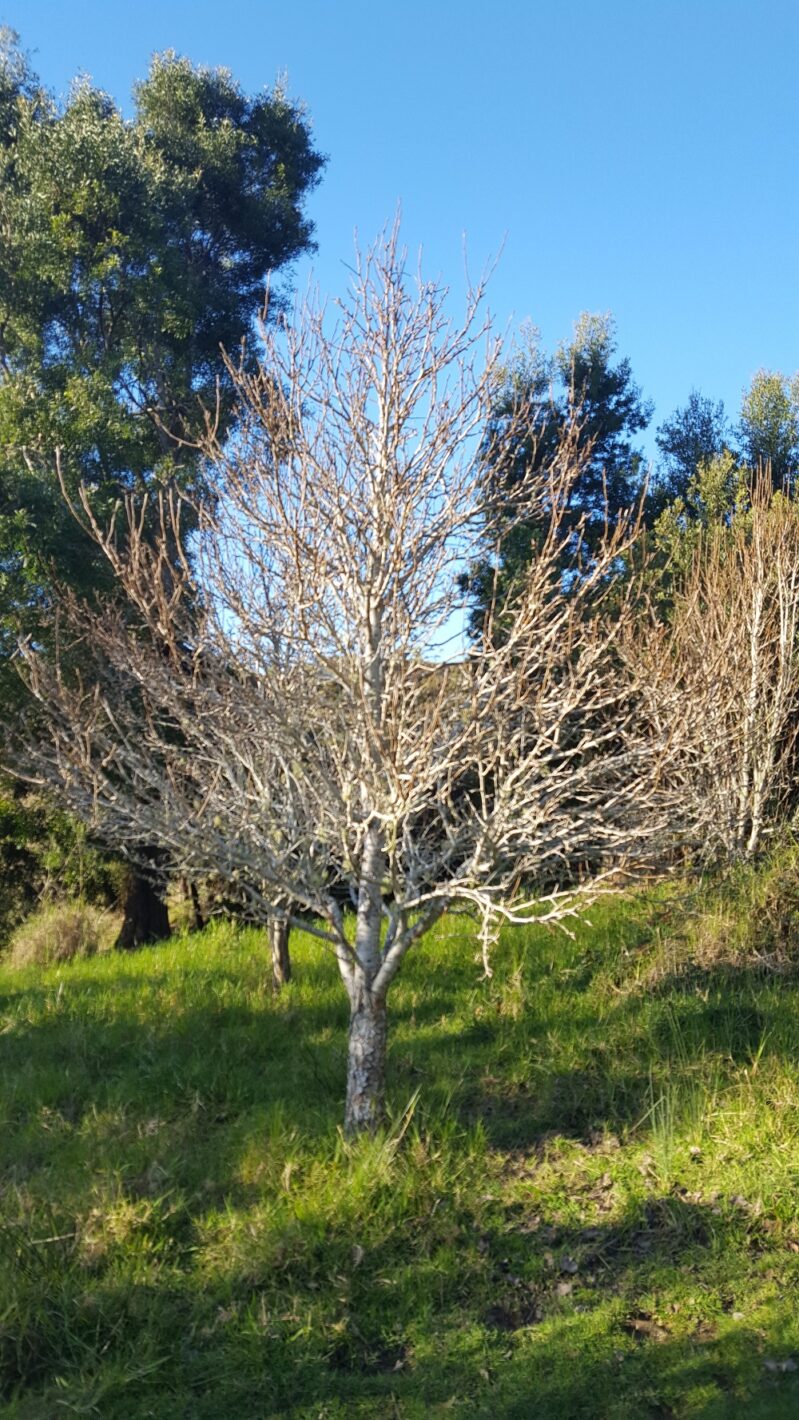
There are lots of things to consider in terms of which trees you want to grow but when considering tree health it’s important to select varieties that are proven to do well in your bio region and that are suitable for organic systems. So this means selecting heritage varieties that came from or do well in your area. Generally speaking heritage trees have not been bred for commercial production which also means they will not have been acclimatised to being grown with sprays and artificial fertilisers. If at all possible buy locally grown heritage trees that have been grown organically and regeneratively. Don’t forget to build extra resilience into your orchard by selecting varieties that fruit at different times. Spreading the harvest makes processing and preserving easier but also helps to reduce the risk of losing a crop due to weather events.
Tree location
Different types of trees require different soil conditions and it’s best to match the tree to the available soil conditions if at all possible. Here are thoughts about some different types of tree:
Peaches, Almonds, Nectarines
Best in free draining soil, need moisture but don’t cope with being waterlogged. In humid areas peaches and nectarines are prone to brown rot (although this is reduced by selecting heritage varieties that do better in humid areas and are less prone to brown rot). Pruning to an open vase shape and locating in a place where there is air movement can help. If you only have very heavy soil it is possible to buy peaches on plum rootstocks that cope with wetter conditions.
Plums
Best on free draining moist soil but cope with wetter conditions than peaches do.
Apples and Pears
Cope with wetter soils again. If you are on clay soils Northern Spy rootstock is suitable for apples.
Tree Planting
The size of the hole needed does vary according to the soil conditions but this is what we do on our clay soil.
- Dig a large hole somewhere between 60cm x 60cm x 60cm and 100cm x 100cm x 100cm in size. The heavier the soil the larger the hole is required.
- As you dig separate out topsoil from subsoil.
- If planting on a slope the earth is piled on the upside as being dug which makes back filling easier. We usually cut the slope behind the tree and fill in front (sometimes using logs to help) to create a level platform for the tree to be planted on.
- Use the spade to slash into and break up the sides of the hole to prevent it glazing and reducing water penetration. Not doing this can mean the tree struggles or drowns in it’s own clay tub.
- Add amendments to the planting hole as you refill it, mixing them into the layers of soil as they are returned to the hole, keeping the subsoil where it belongs and the topsoil on top.
- Suitable amendments include activated charcoal, fungal rich compost, composted ramial wood chip (rwc), pieces of sheep fleece, humanure, well rotted animal manure, dead possums or similar. We aim for some fungal rich content plus a nitrogen source so often use a combination of charcoal, humanure and a fungally rich compost (usually composted rwc).
- Mostly refill the hole and then plant the tree and gently put soil around its roots. Firm the soil around the tree and add more soil to adjust so it’s level with the ground. Not doing this can mean that the tree will sink over time so be in a puddle when conditions are wet.
- Mulch with ramial wood chip if you have it or cut grass if not. Lawn clippings would tend to support more bacterial soil conditions so are not recommended. We use a scythe to cut coarse grass for mulch which has more carbon to support the fungi.
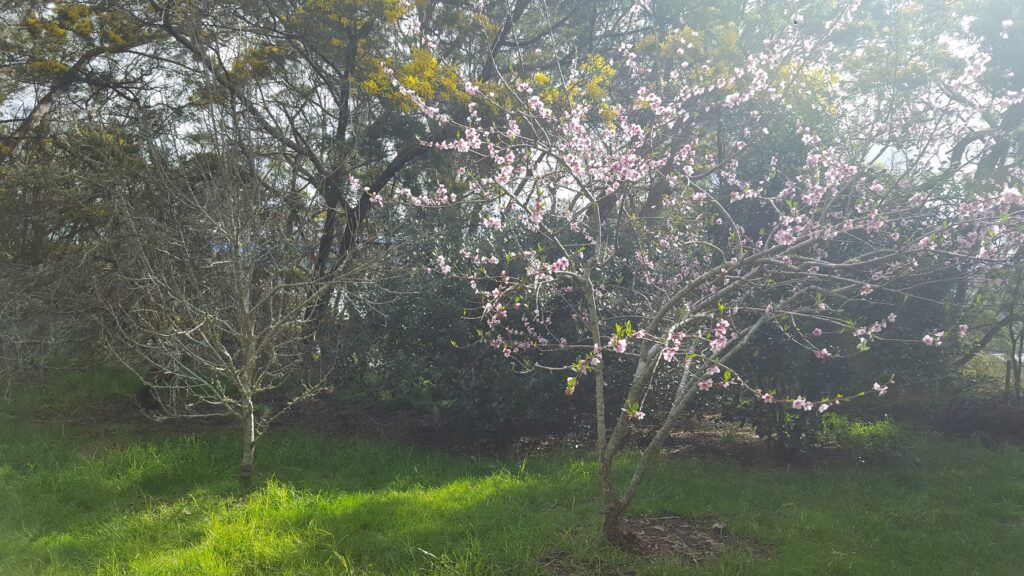
A Seckles Pear and an Orion Peach growing side by side. Both are heritage varieties well suited to growing in Northland. The soil conditions here are wet which is fine for the pear tree but would normally be too wet for a peach. However this Orion is grafted onto marianna plum rootstock and does really well here despite the wet, heavy soil.